Stories that make you think, feel, or act

Get a weekly dose of three stories that expands your knowledge, sparks curiosity, and leaves you changed.

Featured In

Stories

Dive into the latest stories

Stories that make you think, feel or act
When Life Falls Apart, It’s Actually Falling Into Place

3 min read

The butterfly effect is real. One fleeting moment can change the entire trajectory of your life - sometimes in ways you would never choose, and yet would never undo.

In September 2024, I landed in London for what felt like the turning point of my life. A dream fellowship. A new chapter. A fresh start in a city I adored from afar. I arrived with two suitcases, a head buzzing with ideas, and the quiet belief that everything was finally falling into place.

Twenty-four hours later, everything shattered.

I was assaulted on a London street - an experience so sudden, violent, and destabilizing that I remember the blur more than the details. The city I had dreamt about for years no longer felt like a beginning. It felt like a trap. I flew back to India within days, my body safe but my spirit fractured.

I returned home broken, lost, ashamed of breaking down so quickly. I had no framework to explain what happened, no words for the shock crawling under my skin, no roadmap for how to move forward. The life I had planned disappeared overnight.

But here’s the thing about collapse: it creates space. Pain clears the ground for possibilities that would never grow otherwise.

What followed was an unexpected chain reaction - the kind of butterfly effect no one warns you about. I moved to farms across Chennai, Bangalore, and even Montana. Far from the noise of a city, I found myself surrounded by the quiet wisdom of earth, animals, and people who lived life slowly and intentionally. My body softened. My mind opened. My wounds found sunlight.

I wrote - obsessively, urgently, honestly. Over 100,000 words poured out of me. Words that turned into stories, frameworks, ideas. Words that became the foundation of my podcast, my newsletter, my course.

And then something wild happened:
I built the largest immigrant summit in America.

None of this was on the original plan. In fact, nothing went to plan at all.

But everything went on purpose.

That assault - the moment I thought ended everything - actually began everything. It stripped away the false sense of certainty I held onto. It forced me to rebuild my identity from scratch. It pushed me into places I would have never chosen, yet now cannot imagine my life without.

Sometimes life collapses to rebuild you better.
Not kinder. Not easier.
But truer.

I used to think success was about designing a perfect roadmap and executing it flawlessly. Now I know success is often born from the moments you don’t choose, the breaks you don’t anticipate, the storms you don’t see coming.

When life falls apart, pay attention.
The collapse may be the beginning.
The ashes might be the blueprint.

Nothing went to plan - but in hindsight, everything was on purpose.

The Real Risk Isn’t Quitting - It’s Staying Stuck

3 min read

I was making $200,000 a year - about two crores rupees. I had a job most people dream about. My parents were proud. My life looked stable from the outside. By every conventional measure, I had “made it.”

But every morning, before the emails and meetings began, I would hear a quiet voice ask: Is this really what I want to do for the rest of my life? It was a small question, but one that refused to go away. It sat in my chest like a weight, pressing harder every day.

I stayed because I had worked so hard to get there. The long nights, the sacrifices, the years of effort - it all felt too valuable to let go of. My parents had given up so much for my education. Walking away felt irresponsible, even ungrateful. How could I throw it all away?

And I know I wasn’t alone. Many of us stay in jobs that drain us, in relationships that stopped growing, in cities that no longer fit who we’re becoming. We stay because we’ve already spent years, money, and emotional energy getting there. Leaving feels like waste.

But that feeling - that “I’ve already invested too much to walk away” - is what psychologists call the sunk cost fallacy. We hold on because of what we’ve already poured in, even if it no longer serves us.

For a long time, I was caught in that trap.

I kept replaying just one fear: What if I quit and six months later I’m struggling? What if everything falls apart? That question kept me stuck, looping through worst-case scenarios like a movie I couldn’t pause.

But one day, a different question showed up - a question that changed everything:

What if I don’t leave… and six years later, I’m still this unhappy?

That question hit harder than any fear. It forced me to zoom out from the next six months and look at the next six years. It made me see that staying wasn’t the safe option I thought it was. Sometimes the bigger risk is staying exactly where you are, slowly eroding who you could become.

That was my turning point.

Once I saw that staying would cost me far more than leaving ever could, the decision became clearer. Scary, but clear. Walking away wasn’t running from something - it was walking toward the possibility of something better.

So if you’ve been sitting with this feeling for months, maybe even years… if you feel stuck but don’t know how to justify leaving… let this be your sign.

Don’t let the years you’ve already spent determine the years you have left.

Sometimes the bravest step is to walk away anyway.

How Reshma Saujani Turned a Simple Observation Into a Global Movement

2 min read

Meet Reshma Saujani.

During her school visits while campaigning, she noticed a pattern that was hard to ignore: in most computer classrooms, there were barely any girls. The rooms were filled with boys tapping away on keyboards, while girls, equally capable, weren’t even in the picture. Reshma knew this wasn’t a lack of interest. It was a lack of encouragement. Tech simply wasn’t presented to girls as a space where they belonged.

For Reshma, this disparity felt personal. She had grown up watching her father, an engineer, use technology to build things, solve problems, and change lives. She understood the power of tech - not just as a career path, but as a tool for economic mobility, confidence, and creativity. And it bothered her that girls were shut out of it.

So in 2012, despite having no coding background herself, Reshma decided to do something about it. She launched Girls Who Code (GWC) with just 20 girls in a borrowed conference room in New York City. There were no fancy resources, no corporate partners, and no established curriculum. Just a conviction that girls deserved a seat in the tech world.

It wasn’t easy.

Schools didn’t take the program seriously. Many parents weren’t convinced that coding was a “real” career path for their daughters. And companies - while quick to praise the sentiment - hesitated to fund it. The early days were filled with skepticism, rejections, and the constant question of whether this vision would ever scale.

But Reshma persisted. She refined the program, built a curriculum from scratch, and recruited volunteer engineers to teach. Instead of focusing only on technical skills, she emphasized confidence, problem-solving, and community - elements that matter just as much as coding itself. She introduced real-world projects the girls could build, so they could see firsthand that they were not just learning, but creating.

Slowly, things began to change.

The girls were building apps, websites, and tech projects that actually worked. Many of them continued into computer science pathways. The results were unmistakable: Girls Who Code alumni were choosing computer science majors at 15 to 16 times the U.S. national average.

This shifted the perception. Companies began to realize that GWC wasn’t charity - it was a future talent pipeline. A way to address the gender gap not by talking about it, but by solving it.

As credibility grew, so did partnerships, school collaborations, and funding. What started in one borrowed room expanded across the country, and eventually, across the world. Today, Girls Who Code has reached 600,000+ girls, redefining who gets to call themselves a technologist.

All because Reshma acted. She didn’t wait for approval. She didn’t let early failures define her. She took what bothered her and turned it into a global movement - one confident girl, one line of code, and one bold step at a time.

The New Labor Market: Why Mercor Could Redefine How Humans Work With AI

3 min read

Mercor could become one of the most important AI-infrastructure companies of the decade. Or it could be another Silicon Valley rocket that rises too fast and then struggles to sustain its own momentum. That tension - between immense potential and equally immense uncertainty - is what makes Mercor one of the most intriguing companies in the AI world right now.

But despite the hype, the real story isn’t about billionaires, valuations, or venture-capital buzzwords. It’s about something deeper: the birth of a new kind of labor market. One where the question is no longer “Will AI replace humans?” but rather “How will humans teach AI to do meaningful work?”

Mercor sits at the center of this shift. Instead of treating AI as a finished product, the company sees AI systems as constantly evolving entities that require training, interaction, and supervision. And who provides that? Humans. Not in the traditional sense of employees working at a company, but as distributed contributors who help refine AI models through repeated feedback loops.

This is a fundamentally different vision of work. It challenges the old assumption that automation reduces the need for people. In Mercor’s world, automation creates demand - demand for human judgment, creativity, and contextual understanding. AI becomes a learner, and humans become the teachers.

We’re witnessing the emergence of what some call the “training economy.” In this economy, millions of micro-interactions - labeling, correcting, evaluating, contextualizing - form the backbone of AI progress. What used to be done by research labs or in-house teams is now becoming a global, decentralized market. Mercor isn’t just building tools; it’s building infrastructure for this new market to exist at scale.

If the company succeeds, it could reshape how work is distributed globally. Imagine a future where anyone, anywhere, can contribute to training AI systems and get compensated for it. A future where expertise isn’t limited to formal degrees or office locations, but measured by real-world performance in teaching machines to understand the world.

Of course, this vision comes with risks. Scaling such a market requires trust, transparency, and safeguards against exploitation. The company must strike a delicate balance between decentralization and quality control. And it must do so while navigating the rapidly changing regulatory and ethical landscape around AI.

Yet, even with these challenges, Mercor represents a shift in how we think about labor in an AI-driven world. Instead of fearing displacement, we’re beginning to see how human skills can evolve and adapt in partnership with technology. Humans won’t compete with AI - they will train it, shape it, and guide it.

Whether Mercor becomes a generational company or a fleeting Silicon Valley experiment remains to be seen. But one thing is certain: the labor market it is helping create is already here. And it may prove to be one of the most important transformations of our time.

When I Become a Mother: 10 Things I Hope I Never Forget

3 min read

When I imagine becoming a mother someday, I don’t picture perfect mornings or Instagram-ready moments. I imagine the small, human ones - the messy, emotional, sometimes overwhelming realities of raising another person. And I often think not just about the parent I want to be, but the things I hope I never do. These are the intentions I want to hold close.

First, I don’t want a single day to pass where my child doesn’t know that I love them. Not just through words, but through warmth, presence, and the way I show up in their everyday life. Love shouldn’t be something they question; it should be the ground they stand on.

Second, I don’t want to protect them so fiercely that I stunt their growth. Children learn by trying, falling, getting hurt, and trying again. If I shield them from every discomfort, I’d also be shielding them from resilience.

Third, I don’t want to jump to conclusions without hearing their side of the story. I want to remember that children, like adults, deserve to be listened to - not dismissed, judged, or interrupted.

Fourth, I don’t want to smother them with advice. This will probably be the hardest one for me to follow. But I want to let them come to me, not drown them in guidance they never asked for.

Fifth, I don’t want my child to grow up unsure of what love feels like at home. I want our home to be a place where tenderness is normal, where affection isn’t rationed, and where emotional safety is a given.

Sixth, I don’t want laughter to fade from our home. I want kitchen dances, silly songs, and inside jokes that only we understand. A family that forgets how to be playful forgets how to stay close.

Seventh, I don’t want my child to ever feel small for having big emotions. Crying, screaming, melting down - these are all human expressions, not misbehaviors to punish. I want to give them the space to feel without shame.

Eighth, I don’t want to project my unfulfilled dreams onto them. My child shouldn’t exist to complete my story. They should have the freedom to chase their own dreams, even if they look nothing like mine.

Ninth, I don’t want to raise a “good” child - one who simply follows rules, pleases adults, and avoids trouble. I want to raise a kind, curious, courageous human being who knows how to think for themselves and stand for what they believe in.

And finally, I don’t want my child to ever wonder whether I am proud of them. I want them to know - deeply, consistently, quietly - that I am. Not because of their achievements, grades, or milestones, but because they exist.

When I become a mother, I know I will make mistakes. I know I will fall short. But these intentions are my compass. And I hope they guide me toward raising a child who feels loved, seen, and free to become who they truly are.

How a Tiny Caribbean Island Became One of the Biggest Winners of the AI Boom

3 min read

Anguilla is a small island in the Caribbean, home to just 16,000 people and known for its white sand beaches, turquoise water, and a tourism-driven economy. For years, the island’s financial health rose and fell with the travel seasons. It was peaceful, beautiful, and economically predictable. Until something entirely unexpected changed the island’s fortunes - not a new resort, not a surge in visitors, but two letters: .ai.

Every country in the world is assigned a two-letter internet domain. The United States has .us, India has .in, Germany has .de. Anguilla, by sheer coincidence, drew .ai - a designation that meant little for decades.

Then came 2023. ChatGPT went mainstream. Midjourney and Stable Diffusion took over the internet. Perplexity emerged. Thousands of AI startups appeared almost overnight. Investors poured billions into the sector. And with every new AI idea came the same question:

“What domain should we buy?”

Suddenly, “.ai” wasn’t just a country code. It became a global badge of identity - the perfect digital home for any company working on artificial intelligence. From OpenAI to Runway to two-person teams building prototypes in their bedrooms, everyone wanted a domain ending in “.ai.”

And Anguilla owned all of it.

The impact was immediate and staggering. In 2021, before the AI wave fully hit, Anguilla earned around $7 million from domain registrations - a respectable sum for a small island. By 2024, that number had shot up to nearly $40 million, becoming one of the island’s largest revenue sources. That’s almost a quarter of Anguilla’s entire annual income, coming not from tourists on its beaches but from tech founders thousands of miles away.

Think about the scale of that shift: a tiny Caribbean island suddenly became a silent partner in the global AI revolution, not by building models or raising venture capital, but by simply owning the internet’s hottest two letters.

The beauty of this story lies in its serendipity. Anguilla didn’t plan for the AI boom. It didn’t try to position itself as a tech hub. It didn’t compete in global innovation races. All it did was maintain its assigned domain - something most countries never think twice about - and the world came running.

While Silicon Valley raced to build the future, Anguilla quietly sold them the name tags.

This unexpected windfall has given the island new opportunities: infrastructure investment, improved public services, and economic breathing room that would have taken decades to achieve through tourism alone. It’s a reminder that in a rapidly changing world, value can appear in the most surprising places.

As AI continues to expand, the demand for .ai domains shows no sign of slowing down. And Anguilla, with its perfect mix of timing and luck, will continue benefiting from a global technological movement it had no hand in creating.

The world is chasing AI.
But Anguilla?
It simply sold everyone the name tag.

Products

Join our community with 300 others practicing generosity

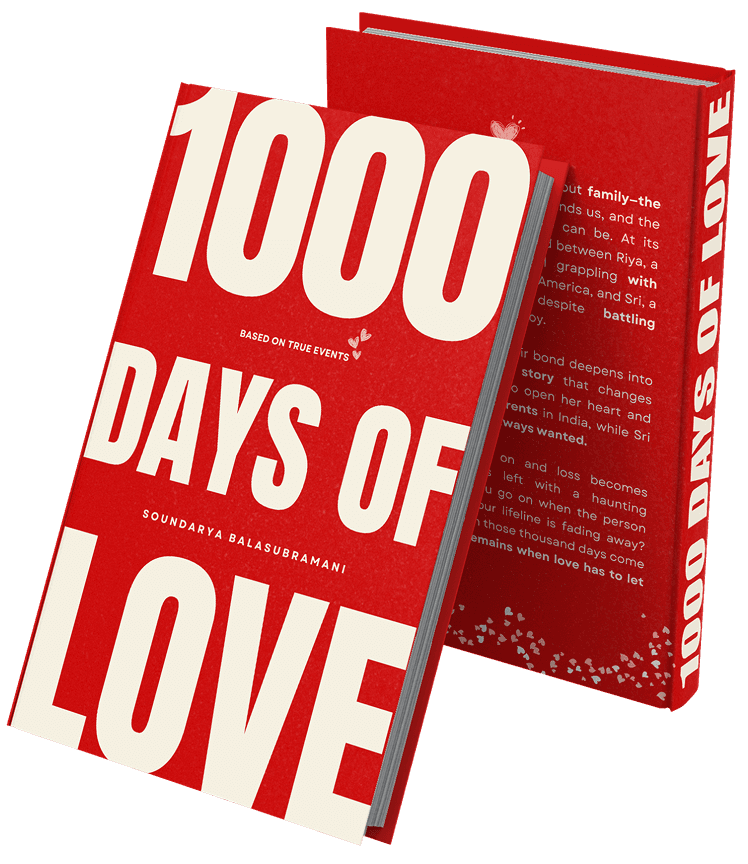
1000 Days of Love is the third book, and first novel, by Soundarya Balasubramani

1000 Days of Love

TODL: The Course

A 5-hour course to shape the next 5 years of your life. Learn how to gain an unfair advantage in life and work.

$49

1000 Days of Love

TODL: The Course

A 5-hour course to shape the next 5 years of your life. Learn how to gain an unfair advantage in life and work.

$49

1000 Days of Love

TODL: The Course

A 5-hour course to shape the next 5 years of your life. Learn how to gain an unfair advantage in life and work.

$49

1000 Days of Love

TODL: The Course + Community

A global membership space for curious people to grow through stories and generosity. Includes access to course.

$99

$79

⭐ Most Popular

1000 Days of Love

TODL: The Course + Community

A global membership space for curious people to grow through stories and generosity. Includes access to course.

$99

$79

⭐ Most Popular

1000 Days of Love

TODL: The Course + Community

A global membership space for curious people to grow through stories and generosity. Includes access to course.

$99

$79

⭐ Most Popular

1000 Days of Love

TODL: The Novel

An uncommon love story between a young girl and an old man - and how love, in all its forms, transforms us.

Coming Sep 2026

1000 Days of Love

TODL: The Novel

An uncommon love story between a young girl and an old man - and how love, in all its forms, transforms us.

Coming Sep 2026

1000 Days of Love

TODL: The Novel

An uncommon love story between a young girl and an old man - and how love, in all its forms, transforms us.

Coming Sep 2026

Newsletter

Join 37,000+ curious mavericks

Join 34,000+ curious mavericks to get a weekly dose of stories that expand your knowledge, spark curiosity, and leave you changed. Welcome gift waiting 🎁.

Join the newsletter to get fresh stories, every week.

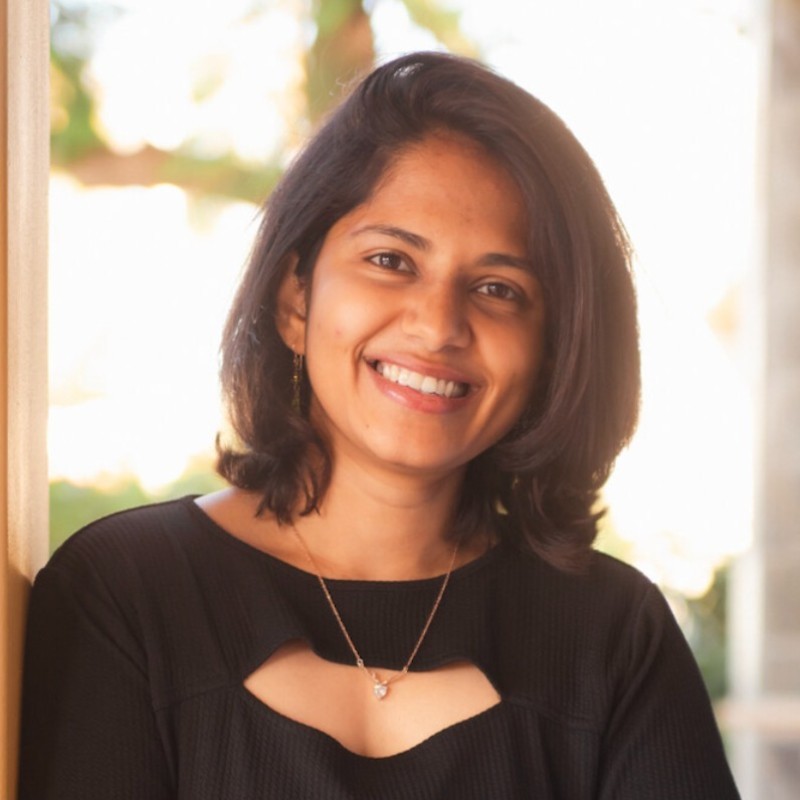
Hi, I'm Soundarya. An author, founder, and next-door storyteller.

© The Curious Maverick LLC 2025.

Newsletter

Join 37,000+ curious mavericks

Join 34,000+ curious mavericks to get a weekly dose of stories that expand your knowledge, spark curiosity, and leave you changed. Welcome gift waiting 🎁.

Join the newsletter to get fresh stories, every week.

Hi, I'm Soundarya. An author, founder, and next-door storyteller.

© The Curious Maverick LLC 2025.

Newsletter

Join 37,000+ curious mavericks

Join 34,000+ curious mavericks to get a weekly dose of stories that expand your knowledge, spark curiosity, and leave you changed. Welcome gift waiting 🎁.

Join the newsletter to get fresh stories, every week.

Hi, I'm Soundarya. An author, founder, and next-door storyteller.

© The Curious Maverick LLC 2025.